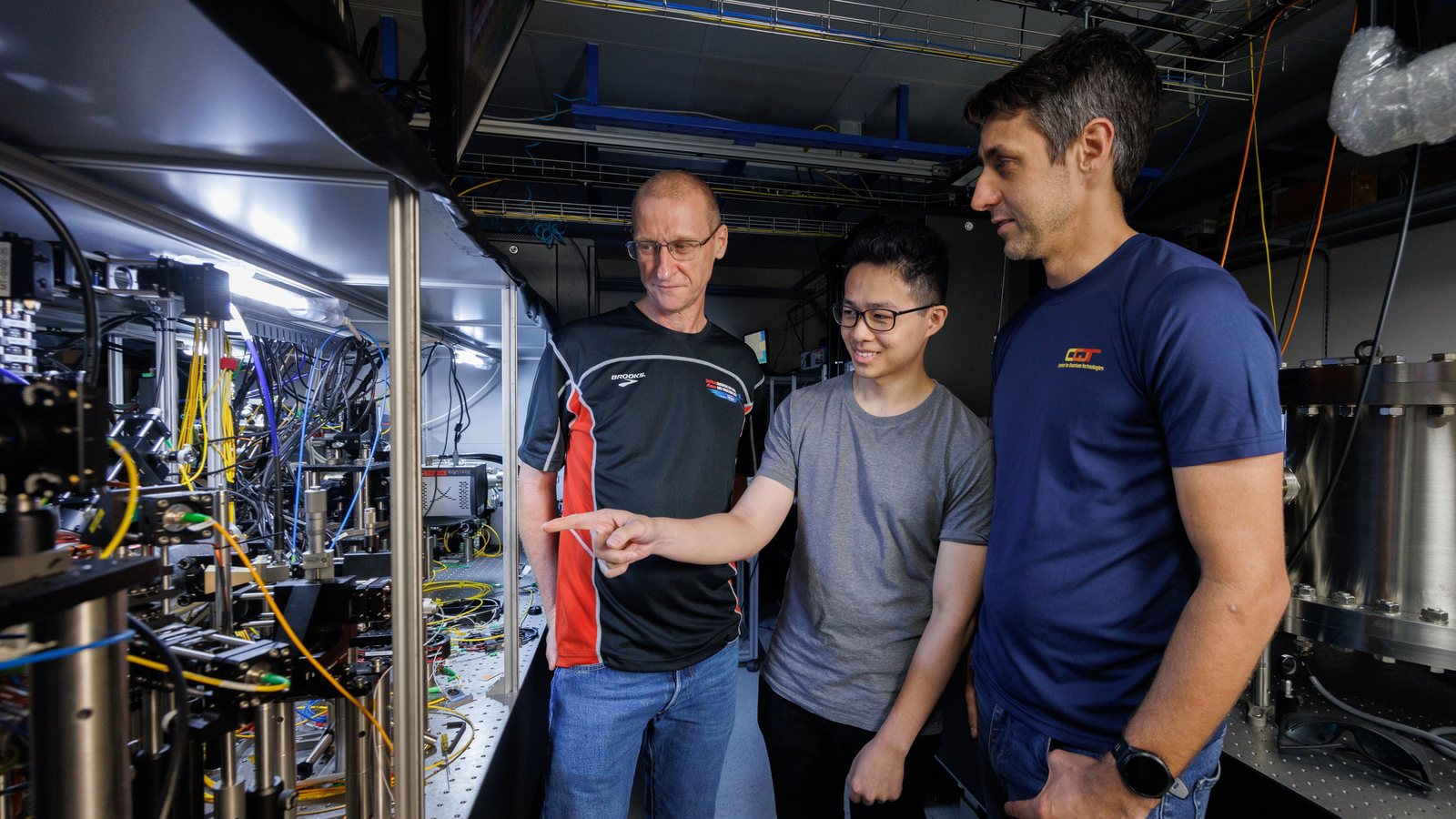
A single lutetium ion gives Singapore the world's most accurate atomic clock
Researchers at the Centre for Quantum Technologies report an optical clock with an uncertainty of one part in 10 to the power of 19, the lowest yet published.
A lutetium atomic clock built at Singapore's Centre for Quantum Technologies (CQT), based at the National University of Singapore, has set a new mark for accuracy. Results published in Nature on 23 September show the clock keeps time with an uncertainty of 1 part in 10 to the power of 19, the lowest reported for any optical atomic clock.
Atomic clocks count time by locking a laser to the light an atom absorbs when an electron changes energy level. Each CQT clock holds a single charged lutetium-176 ion, matched to an 848 nanometre laser. The team built two such clocks and compared them over 200 hours using correlation spectroscopy. They agreed to within 5.7 parts in 10 to the power of 19, the most precise clock comparison yet made.
The group, led by Associate Professor Murray Barrett of the NUS Department of Physics, with Senior Research Scientist Kyle Arnold and PhD student Michael Lee, began working with lutetium more than a decade ago and is thought to be the only team using it for timekeeping. Its clock transition is largely insensitive to changes in temperature and magnetic field. "I am confident that what we have now is the most accurate clock in the world," Barrett said.
The result matters beyond the laboratory. Caesium clocks have defined the second since the 1960s and underpin GPS and communication networks, and the international body that governs time standards is weighing optical clock data for a redefinition of the second expected in or after 2030. The team's next step is to shrink the laboratory system into a transportable clock without losing accuracy.
Source: the original release from National University of Singapore, reporting research published in Nature. Summarised by GRP Research News.
For universities
The Collaboration and Funding Blueprint
Your institution's collaboration network, funding evidence and partner opportunities, mapped in one document. Three options, one document, from the team behind the index. Sample Blueprints are open to read.